Up the airy mountain, down the Rushy Glen
It’s the 4 th of July, Independence Day in the USA and a special anniversary marking 250 years since the signing of the Declaration of Independence. There are many historic connections between the US and Northern Ireland, with many of the Founding Fathers of Ulster-Scots origin, such as Charles Thomson of Maghera, one of the only two signatories on the first declaration alongside the more famous, John Hancock.
Yet there are other more recent connections with the US.
During the Second World War, 300,000 US Servicemen passed through Northern Ireland on their way to war.
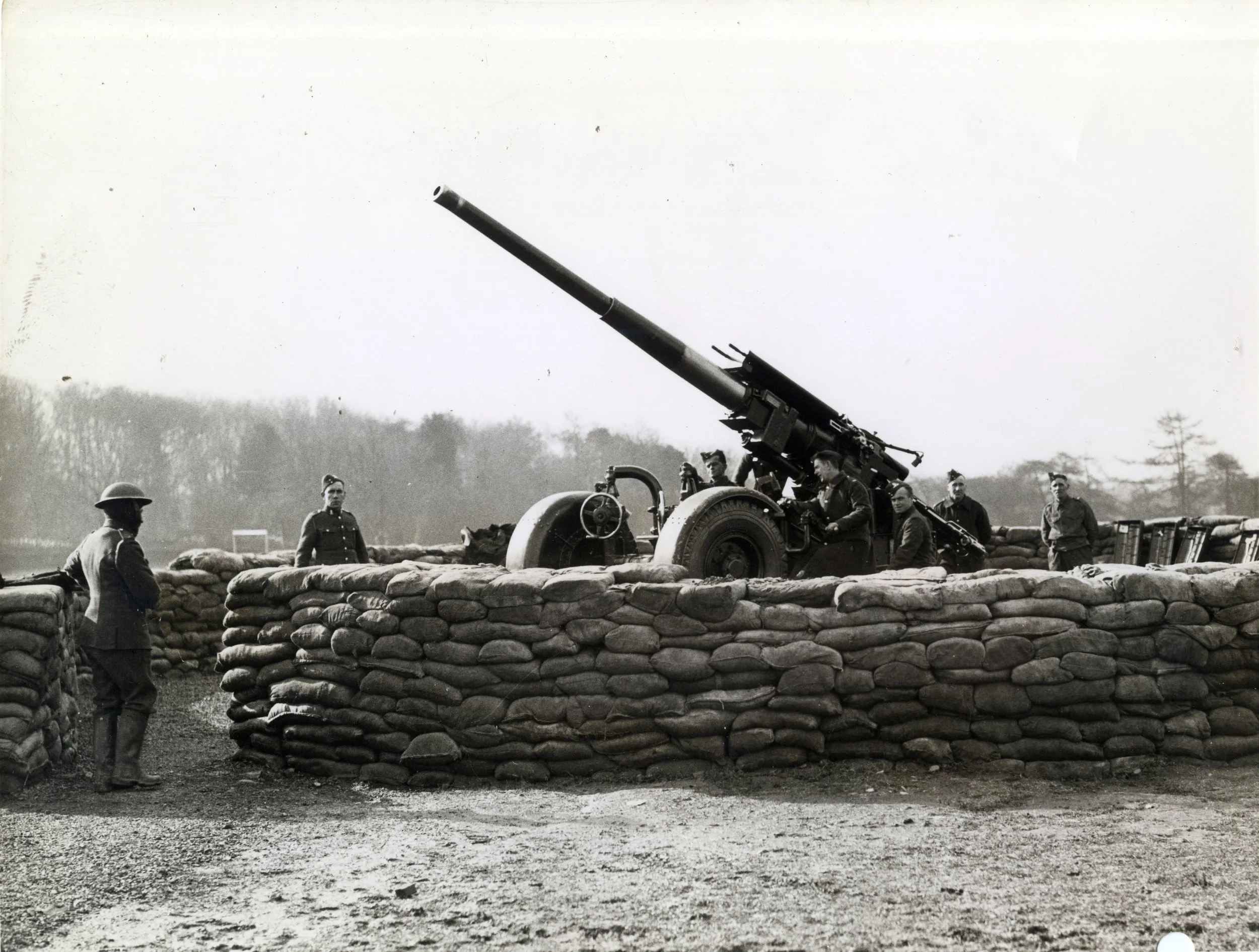
Anti-Aircraft gun at Lisnabreeny, courtesy of the NI War Memorial Museum
Many had never left the United States before and Northern Ireland was a bit of a culture shock to them. All servicemen in Northern Ireland were issued a ‘Pocket Guide to Northern Ireland’ that offered sound advice like ‘Never discuss politics or religion with an Irishman’ and ‘Watch out for Poitín it’s dynamite!’
Beyond the cultural impact, there was a logistics problem facing the American forces in 1942 - if an American died in Northern Ireland, where would they be buried?
Upon their arrival in 1942, the American Government requested land for the emergency burial of US servicemen who died while in Northern Ireland. Stormont agreed to their request and gave them a plot in Belfast City Cemetery, which was full within 6 months. A new location was found in the quiet Castlereagh Hills, overlooking Belfast, just opposite the modern day Lagan College. This 105 acre field would become Lisnabreeny American Military Cemetery, the temporary resting place of 148 US servicemen who were buried there from 1942.
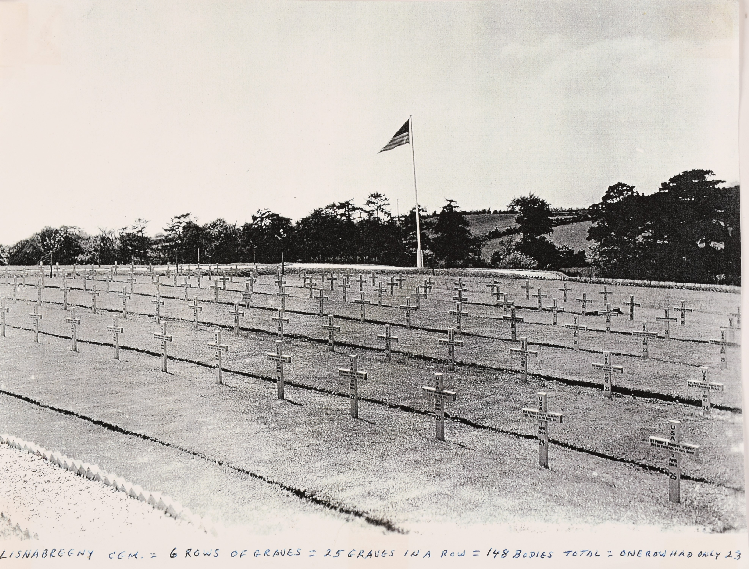
Lisnabreeny American Military Cemetery, courtesy of the NI War Memorial Museum
Their causes of death ranged from natural causes to road traffic collisions and aviation accidents. One of these accidents even inspired a Hollywood (California not North Down) blockbuster from Richard Attenborough Closing the Ring (2007) starring Shirley McLaine & Christopher Plummer. This story was loosely based on the B-17 crash that took place on the 1 June 1944, when a plane crashed in heavy fog at Cave Hill with the loss of all 10 crew.
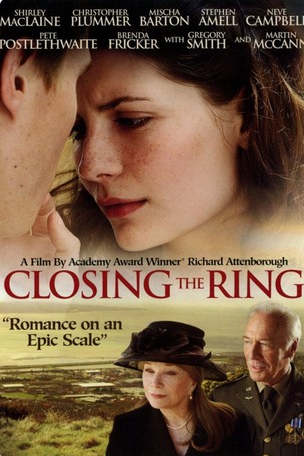
50 years after the crash, a ring was found by a local man, who was able to research and identify the casualty and reunite the ring with the family in America.
After the war, Lisnabreeny was closed and in 1947 the decision was made to repatriate the men buried at Lisnabreeny, either to their hometowns in the US or the Cambridge American Cemetery in England.
Despite offers from the Northern Ireland Government at the time and a personal assurance by Sir Basil Brooke that his government would ensure maintenance of the site, in 1948 all bodies were exhumed.
While no longer an official cemetery, Castlereagh Borough Council erected a memorial plaque in 2005 and then a memorial garden in 2013. This acts as a permanent reminder of the US presence in Northern Ireland.
Lisnabreeny American Military Cemetery is one of the stops on my new walking tour, Up the airy mountain, down the Rushie glen: Lisnabreeny Rath and Cregagh Glen – highlighting many local topics including the American presence in Northern Ireland during the Second World War, the history of integrated education and many of the characters of the Robb Family who lived at Lisnabreeny such as Ulster-Scots Poet, Nesca Robb who donated the estate to the National Trust.
The first outing of this new walking tour will be on Tuesday 25th August beginning at 6.30pm, and you can book tickets below